The Periodic Spiral of Elements is an alternative version of the Periodic Table, which was originally published in 1964 by Dr. Otto Theodore Benfey. Originally created as a teaching tool, the graph organizes elements by electron “shells”, updating the traditional version of the graph with modern chemical theory. In addition to an improved visualization of elemental periodicity, the graph has an origin (center), even spacing between elements (metric) and continuous. These improvements make it an ideal surface to use as a graph.
In 2022, I began research onto the Periodic Spiral of Elements while serving as a sketching facilitator at the Harvard Natural History Museum. Like many others, I found mineral crystals inspiring for their range in color, texture, and shape. However, I was initially confounded by them as well. Beneath each specimen was a name-tag which specified the chemical composition of each mineral. Despite having taken some classes in chemistry, I failed to see how that string of letters and numbers related to the form on display.
Traditional models used to visualize the structure of mineral crystals (or other compounds) typically rely upon the ball and stick method. Especially for mineral crystals, these models can require a host of variables and terminology in order to construct (and understand). So, I set out to explain these structures to myself in a different way. This is where the Periodic Spiral comes in.
Initially, I was simply placing a point at each element I saw on the graph. Almost instantly, I found that it was a useful way to start to relate that information together. Over the following years, I improved the method used to translate a chemical formula onto the spiral graph using vectors (arrows of specific magnitude and direction).
After gathering hundreds of different examples, I’m still amazed at the ability of these graphs to generalize the form of mineral crystals and aide in identifying their specific chemical structure. To test this method further, I began preforming experiments with small groups which compared the use of these models with the traditional ball and stick models.
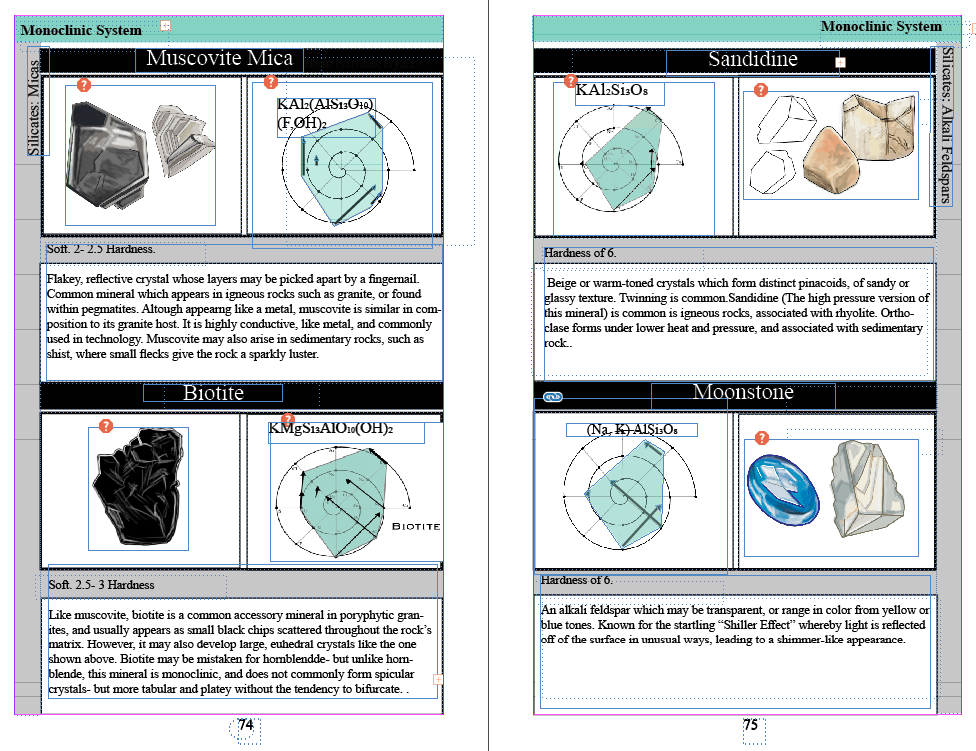
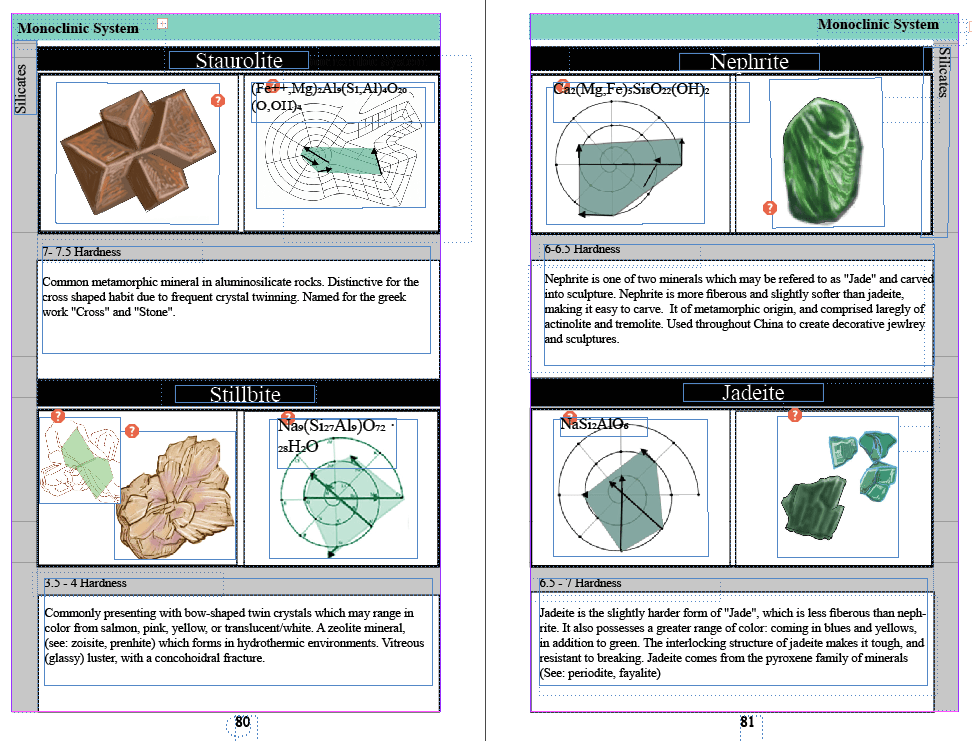
Graphs on the PSE are far more effective at generalizing the structure of mineral crystals than traditional models, and report higher accuracy, engagement in scientific material, and general understanding by participants. A collection of samples has been curated into a book, with examples shown below.
If you are interested in purchasing a copy of this work, please send an email with such a request.
For pick-up, each text is $20
Shipping costs are an additional $10 or more depending on location.


 AZScientific